
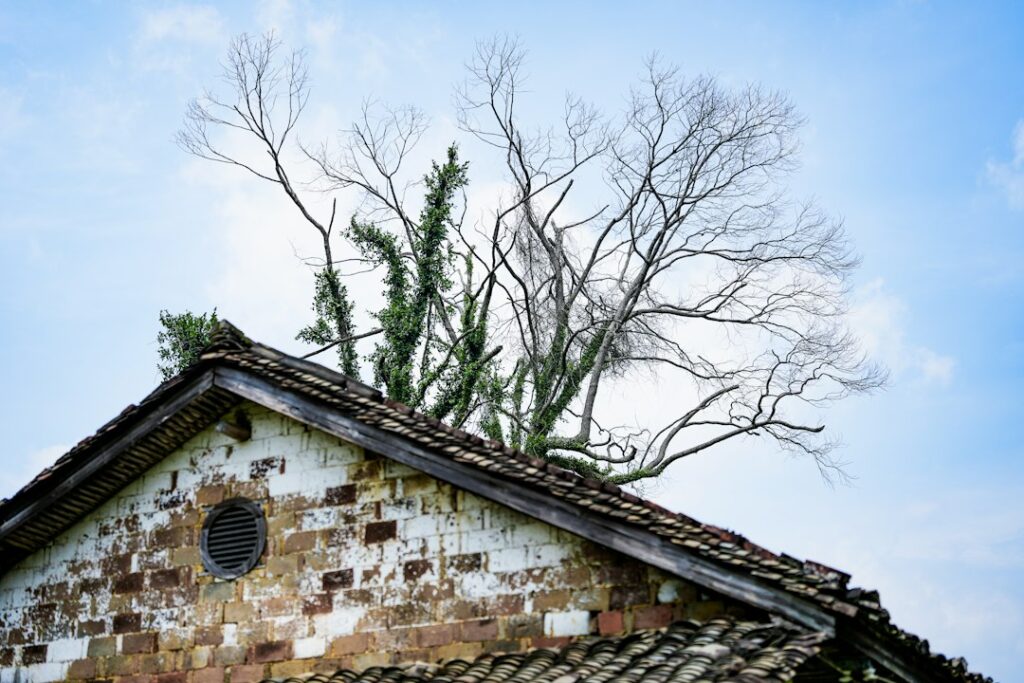
Tree limbs can affect a roof in several ways, from gradual abrasion to sudden impact during a storm. In Clinton, NY, seasonal wind, heavy snow, ice buildup, and wet ground can all increase the chance that a weak or overextended branch will damage roofing materials or fall onto a home.
The risk is not limited to large branches. Small limbs and twigs can also clog drainage areas, wear down shingles, and create pathways for moisture over time.
How can tree limbs damage a roof?
A falling limb can break shingles, puncture underlayment, damage roof decking, or strike flashing around chimneys, vents, and skylights. The severity depends on the limb’s size, weight, angle of impact, and the condition of the roof.
Common types of damage include:
- Cracked, torn, or missing shingles
- Punctures through roofing materials
- Bent or detached flashing
- Damaged gutters and downspouts
- Broken vent covers or plumbing vent boots
- Dents in metal roofing
- Crushed roof decking or structural framing
- Leaks that appear hours or days after the impact
A branch does not have to fall completely through the roof to create a problem. Even a glancing strike can loosen shingles or break the seals that help keep wind-driven rain out.
Can branches damage a roof without falling?
Yes. Overhanging branches may scrape against shingles during windy conditions, especially when the branch is close to a roof slope or ridge. Repeated movement can wear away protective granules, lift shingle edges, and expose the underlying material.
Branches can also rub against siding, gutters, fascia, and chimney components. During wet weather, bark and leaves may hold moisture against the roof surface. This can encourage moss or algae growth in shaded areas and make it harder for roofing materials to dry.
Small twigs and leaves may collect in valleys and behind roof features. If water cannot flow freely toward the gutters, it may back up beneath roofing materials or spill over the roof edge.
Why are winter conditions a concern in Clinton?
Winter weather can add weight and stress to branches that already extend over a roof. Snow can accumulate on evergreen limbs, while freezing rain may coat branches with a heavy layer of ice. A branch that appears stable in autumn may become hazardous after repeated snow and ice events.
Freeze-thaw cycles create another concern. Ice can form in cracks, branch unions, and damaged areas of a tree. As temperatures change, these weak points may expand or fail. Strong winter winds can then bring down limbs that were already compromised.
Wet soil may also make it easier for shallow-rooted or weakened trees to shift during storms. In some cases, the entire tree becomes a threat even if the branches themselves appear healthy.
Which trees and branches deserve closer attention?
A visual inspection can identify warning signs, although tree defects are not always obvious from the ground. Pay closer attention to limbs that:
- Are dead, cracked, or missing bark
- Have visible cavities or decay
- Form narrow, weak-looking branch connections
- Hang directly over the roof
- Have been damaged by a previous storm
- Are unusually long or heavily weighted at the end
- Touch the roof, chimney, utility lines, or gutters
- Lean toward the house or show exposed roots
Branches that have broken but remain suspended in the canopy are especially unpredictable. They may fall during the next gust, snowfall, or thaw.
What roof areas are most vulnerable?
Roof edges and lower slopes often receive damage from falling limbs because branches can strike them as they descend. Roof valleys are vulnerable to leaf and twig accumulation because they concentrate water from two slopes.
Roof penetrations also deserve attention after an impact. Chimneys, plumbing vents, exhaust vents, skylights, and other raised features can be cracked or displaced even when the surrounding shingles look intact.
Gutters may bend or pull away from the fascia. A damaged gutter can then direct water toward siding, trim, windows, or the foundation rather than away from the home.
What should residents do after a limb hits the roof?
Safety comes first. Do not climb onto the roof during or immediately after a storm, particularly when surfaces are wet, icy, snow-covered, or unstable.
From the ground, look for:
- New gaps or missing shingles
- A sagging roofline or ceiling
- Water stains on ceilings or walls
- Daylight visible in the attic
- Hanging branches or damaged utility lines
- Displaced gutters, vents, or flashing
- Debris blocking valleys or drainage areas

If water is entering, place containers beneath active drips and move belongings away from the affected area if it is safe to do so. Avoid touching wet electrical fixtures or wiring.
A fallen tree or limb near electrical lines should be treated as energized, even if the power appears to be out. Stay clear and report the hazard through the appropriate emergency or utility channel. Do not attempt to cut, move, or pull branches that are tangled with wires.
Photographs from the ground can help document what happened, but personal safety is more important than collecting close-up images.
Can a homeowner remove a branch near the roof?
Some small branches can be removed safely from ground level with suitable hand tools, but cutting large, elevated, cracked, or tensioned limbs can be dangerous. A branch under tension may move suddenly when cut, and a limb resting on a roof may shift as its weight changes.
Tree work becomes particularly hazardous near power lines, steep roofs, chimneys, and unstable branches. Those conditions require specialized knowledge and equipment. Cutting a branch incorrectly can also leave a larger wound on the tree or cause additional property damage.
Do not remove a tree or major limb solely because it is close to a roof without first considering its condition, lean, root stability, and surrounding obstacles.
How can tree-related roof damage be reduced?
Prevention begins with keeping trees and roofs from interfering with each other. Useful steps include:
- Inspecting trees and roof areas at least once each year
- Checking again after major wind, ice, or wet-snow events
- Keeping branches from resting on shingles or gutters
- Removing deadwood before storm season
- Clearing leaves and twigs from valleys and gutters
- Watching for trees that lean toward the house
- Avoiding storage or parking beneath visibly damaged limbs
- Keeping attic spaces monitored for signs of roof leaks
Pruning should preserve the tree’s natural structure rather than simply cutting back every branch near the building. Removing too much growth can weaken a tree, encourage decay, or create new structural problems.
Does a small branch still need attention?
A small branch may not cause immediate structural damage, but it can still create maintenance problems. Twigs can puncture or scrape roofing materials, block drainage, and conceal damaged shingles. A minor-looking impact may also break a seal around flashing or a vent, allowing moisture to enter gradually.
After any noticeable limb strike, inspect the roof from a safe location and check the attic or upper ceilings for signs of moisture. Early detection can prevent a small opening from becoming a larger water-infiltration problem.
Tree limbs and roofs interact throughout the year. Regular observation, prompt attention after storms, and caution around unstable trees can reduce damage while protecting both the home and the surrounding landscape.
