
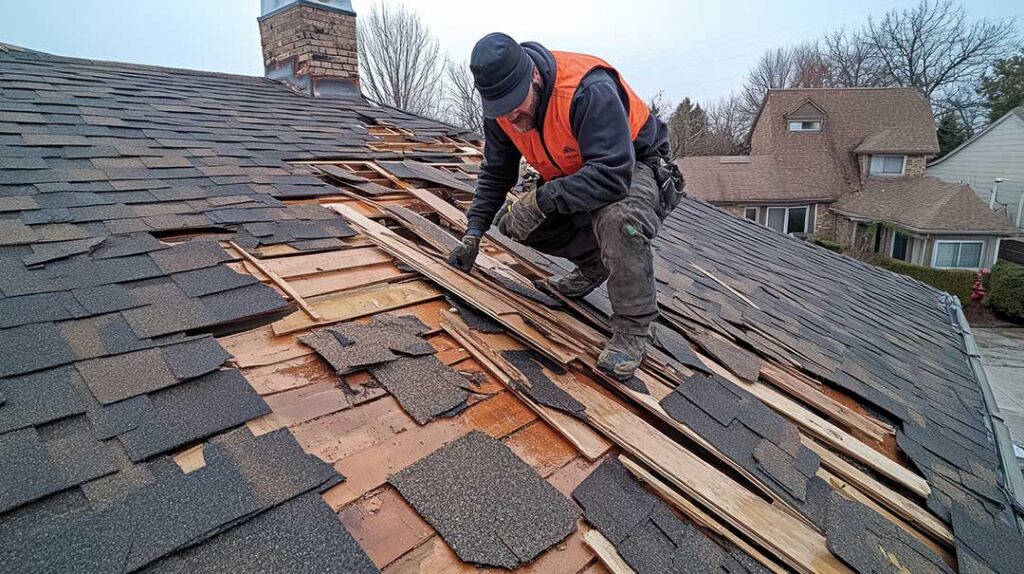
A roof rarely fails all at once. More often, aging materials, repeated weather exposure, and small defects gradually reduce the roof’s ability to keep water out. For homeowners in Clinton, NY, knowing the difference between a repairable problem and a roof nearing the end of its service life can help prevent interior damage and unexpected disruption.
How long does a typical roof last?
A typical asphalt shingle roof lasts about 15 to 30 years, although the actual lifespan depends on material quality, installation, ventilation, roof slope, maintenance, and weather exposure.
In this area, roofs experience a demanding seasonal cycle. Snow and ice can remain on roof surfaces for extended periods, while freeze-thaw conditions may widen small cracks and loosen materials. Summer heat, wind, fallen branches, and moisture also contribute to gradual wear.
Age alone does not always require replacement. A well-maintained roof may perform beyond its expected range, while a poorly ventilated or storm-damaged roof may deteriorate sooner. Age is best considered alongside visible condition and the history of repairs.
What are the clearest signs that a roof needs replacement?
The strongest warning signs are widespread wear, repeated leaks, and damage that extends beyond one isolated area.
Look for:
- Shingles that are curling, buckling, cracked, or missing
- Large areas where the surface granules have worn away
- Dark streaks, exposed underlayment, or visible roofing layers
- Sagging along the roofline or between supports
- Repeated leaks in different parts of the home
- Daylight visible through the attic roof deck
- Rusted or damaged flashing around chimneys, vents, and roof edges
- Heavy moss or organic growth combined with moisture damage
- A history of multiple repairs in a short period
A few missing shingles after a wind event may be repairable. However, widespread brittleness, surface loss, or recurring leaks usually suggests that the roofing system is aging rather than suffering from a single isolated defect.
Does a roof need replacement if it leaks?
Not necessarily. A single leak does not automatically mean the entire roof must be replaced. The source may be a damaged flashing joint, a failed pipe boot, a small area of missing shingles, or ice-related water backup near the eaves.
The location of an interior stain also may not match the location of the exterior problem. Water can travel along roof decking, insulation, rafters, and framing before appearing on a ceiling or wall.
Replacement becomes more likely when:
- Leaks continue after previous repairs
- Several roof areas are affected
- The shingles are near or beyond their expected service life
- The roof deck has widespread moisture damage
- Repairs require removing large sections of deteriorated material
- The cost and frequency of repairs are approaching the value of continued short-term use
A temporary repair can limit immediate water entry, but it does not restore an aging roof that has widespread material failure.
How can homeowners tell the difference between repair and replacement?
The decision depends on the extent, age, and pattern of damage. A small, clearly defined defect on a relatively young roof is often a repair issue. A roof with broad deterioration, repeated failures, or structural sagging is more likely a replacement issue.
A practical way to think about the decision is to ask three questions:
1. Is the damage isolated? One damaged area is different from deterioration across multiple slopes.
2. Is the underlying roof still sound? Shingles may appear acceptable while the decking or ventilation system has serious problems.
3. Are repairs solving the cause or only the symptom? Repeated patching can become less effective when the entire system is aging.
When structural sagging, active interior water entry, or unsafe access is involved, evaluation should be treated as a safety matter rather than a routine maintenance task.
What should homeowners check after winter?
Spring is a useful time to look for changes caused by snow, ice, and freeze-thaw movement. A ground-level inspection can reveal many warning signs without requiring anyone to climb onto the roof.
Check for:
- Shingle pieces or roofing granules near downspouts
- New stains on ceilings, attic insulation, or upper walls
- Bent or detached gutters
- Damaged flashing around roof penetrations
- Ice-damaged edges or loosened shingles
- Tree limbs rubbing against the roof
- Areas where snow or ice repeatedly accumulated
- Water pooling near the foundation because of blocked drainage
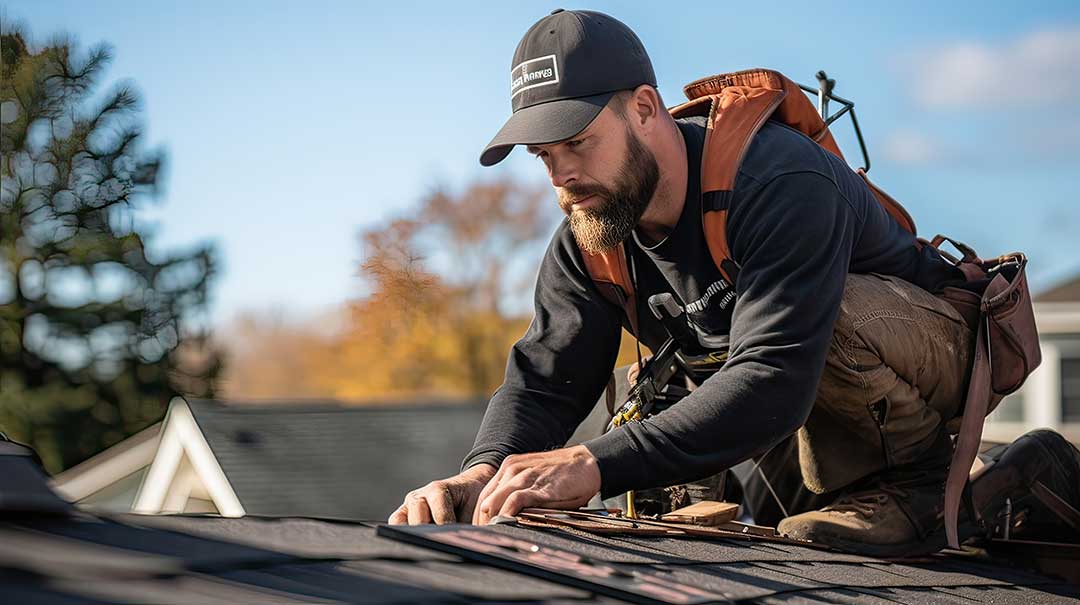
Attic conditions can also provide useful information. Damp insulation, musty odors, visible staining, or daylight through the roof deck may indicate leaks or inadequate ventilation. Since roof surfaces can be slippery, steep, or weakened by hidden damage, climbing should not be attempted when conditions are hazardous.
Can a roof look acceptable from the ground but still need replacement?
Yes. Some serious problems are hidden beneath the visible shingles. The roof may look reasonably uniform while flashing has failed, fasteners have backed out, ventilation is inadequate, or the decking has begun to soften.
Granule loss is another example. A roof can retain its basic color while losing the protective surface that helps shield asphalt from ultraviolet exposure. Granules commonly collect in gutters and downspouts, especially as shingles age.
Interior evidence may be more revealing than appearance from the yard. Peeling paint, discolored drywall, damp attic insulation, or recurring musty odors can point to moisture intrusion even when no obvious exterior hole is visible.
Does poor attic ventilation shorten roof life?
Poor ventilation can contribute to premature roof aging. During warm weather, trapped heat may accelerate shingle deterioration. During cold weather, inadequate airflow can allow moisture to accumulate in the attic, contributing to condensation, mold growth, and deterioration of wood components.
Ventilation problems do not always mean the roof itself must be replaced. In some cases, correcting airflow and insulation issues can improve the performance of a roof that is otherwise in good condition. If the roofing materials are already brittle, leaking, or badly worn, ventilation improvements may need to be addressed as part of a larger replacement project.
What local conditions can shorten roof life?
Roofs in the community must handle more than ordinary rainfall. Snow loads, drifting snow, ice dams, strong winds, falling branches, and repeated freeze-thaw cycles can all affect roofing materials.
Roof design also matters. Low-slope sections, complex roof intersections, dormers, valleys, and areas beneath large trees may be more vulnerable to water or debris. Homes with older additions can have several roof sections with different ages, materials, and drainage patterns, making one part appear healthy while another requires attention.
Regular visual checks after major storms and before winter can identify changes early. Keeping gutters clear and trimming branches away from the roof can also reduce avoidable stress, although these steps cannot reverse age-related deterioration.
Is roof replacement urgent?
Some conditions require prompt attention. Active leaking during rain, visible sagging, exposed roof decking, large areas of missing shingles, or water near electrical fixtures should not be ignored.
Other signs allow for more planning, such as an older roof with moderate granule loss but no active leaks. Planning ahead can provide time to compare material options, understand ventilation and flashing needs, and avoid making decisions during an emergency.
The most useful indicator is not a single missing shingle or one ceiling stain. It is the overall pattern: the roof’s age, the number of problem areas, the condition of the underlying structure, and whether repairs have remained effective over time.
