
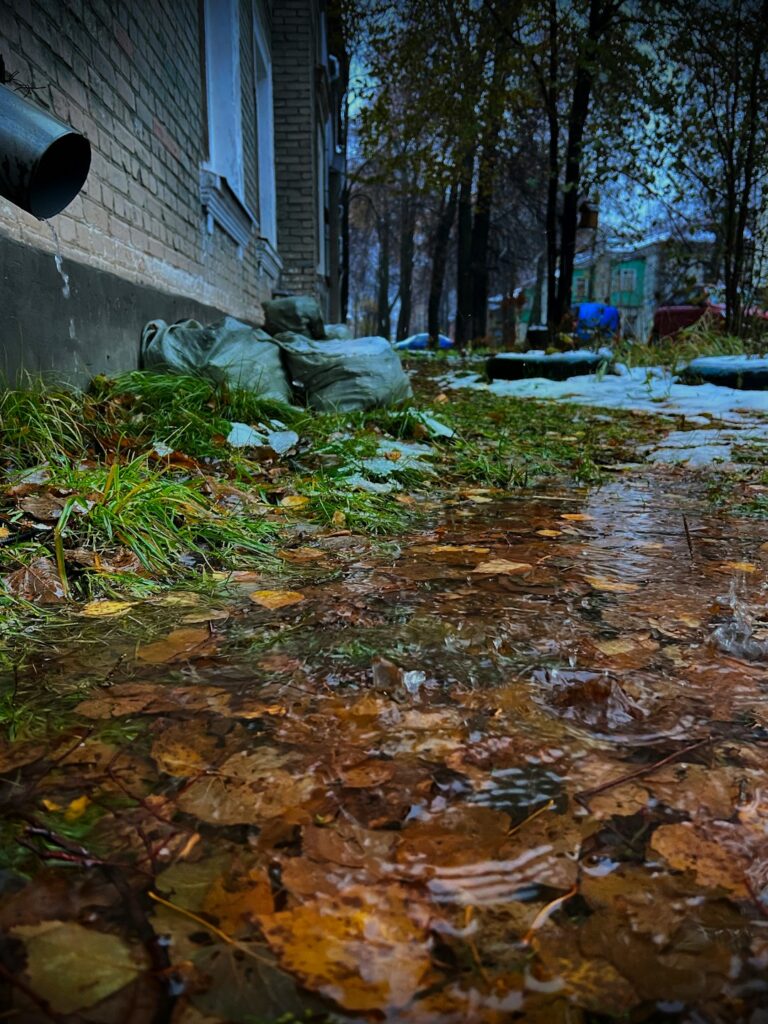
Why do gutters matter to roof health?
Gutters protect a roof by directing rain and melting snow away from the roof edge, walls, foundation, and surrounding soil. Without reliable drainage, water can collect along roof edges, soak under shingles, damage fascia boards, and contribute to leaks that may not appear indoors until the problem has progressed.
In Clinton, NY, gutters face repeated seasonal stress. Spring rain, summer thunderstorms, autumn leaf buildup, freeze-thaw cycles, and winter snow all affect how well the drainage system performs. A roof may have sound shingles and flashing, yet still develop moisture problems if water is not carried away efficiently.
Gutters do not make a roof waterproof. Their role is to reduce the amount of water that reaches vulnerable building components and to move that water to a safer discharge point.
How can poor gutter drainage damage a roof?
Poor drainage often begins at the roof edge. When gutters are clogged, sagging, undersized, or installed with the wrong slope, water may remain in place instead of flowing toward the downspouts.
That standing or overflowing water can cause several types of damage:
- Rot at the roof edge: Repeated wetting can damage fascia boards, soffits, roof decking, and the ends of rafters.
- Shingle deterioration: Water that backs up beneath shingles can loosen materials and weaken the underlayment.
- Ice-related problems: During winter, trapped water can freeze and expand. In some conditions, this contributes to ice dams that force water beneath roofing materials.
- Flashing stress: Overflowing water can run behind wall or roof flashing, where it may enter concealed areas.
- Moss and organic growth: Persistently damp roof edges can create conditions where moss and other growth are more likely to develop.
A small drip from a gutter may appear harmless, but repeated moisture exposure can be more damaging than a single heavy rainstorm.
Can gutters prevent roof leaks?
Gutters can help prevent certain water-related roof leaks, but they cannot prevent every type of roofing failure. They are most effective against problems caused by uncontrolled runoff at the roof perimeter.
Gutters will not correct:
- Missing or damaged shingles in the middle of a roof slope
- Failed plumbing or chimney flashing
- Condensation caused by poor attic ventilation
- Roof penetrations that were improperly sealed
- Structural movement or deteriorated roof decking
This distinction matters because a leak near an exterior wall or ceiling corner may be blamed on gutters even when the actual source is flashing, siding, a vent, or another roof opening. Water can travel along decking and framing before appearing indoors, so the visible stain is not always directly below the original entry point.
What gutter problems are most common after winter?
Winter can leave gutters with problems that are not obvious from the ground. Ice, snow weight, and repeated freezing and thawing may pull fasteners loose, distort the gutter slope, or separate joints.
Common signs include:
- Gutter sections that appear lower in the middle
- Water spilling over one section during rain
- Downspouts that detach from the wall
- Cracks or open seams
- Fascia boards that look soft, stained, or swollen
- Ice marks along the roof edge
- Pooled water near the foundation
A gutter must have a slight, consistent slope toward its downspout. If sections sag, water may remain inside even when there is no visible clog. Standing water adds weight, encourages corrosion or joint failure, and increases the chance that freezing will damage the system.
How often should gutters be checked in Clinton?
Most homes benefit from checking gutters at least twice a year: once in late spring and again after most leaves have fallen in autumn. Homes beneath mature trees may need more frequent attention, especially after windstorms.
A seasonal inspection should look at both the gutters and the roof edge. Check for:
- Leaves, twigs, seed pods, and roof granules
- Loose or missing hangers and screws
- Separated seams
- Rust, holes, or peeling finishes
- Downspouts blocked at the top or bottom
- Water stains on fascia and soffits
- Erosion below downspout outlets
- Soil or mulch pressed against exterior walls

Heavy rain is also useful for observation. From a safe location on the ground, note whether water flows steadily through the system or pours over the front edge. A gutter that overflows during ordinary rainfall may be too small for the roof area, improperly pitched, obstructed, or receiving more runoff than its downspout can handle.
Does gutter cleaning protect shingles?
Gutter cleaning does not directly preserve the surface of every shingle, but it helps protect the roof system as a whole. Clearing debris allows runoff to leave the roof edge instead of backing up beneath the shingles or soaking adjacent wood components.
There is also a practical connection between gutter condition and roof maintenance. Large amounts of shingle granules in the gutter may indicate normal aging, but an unusual increase can signal accelerated wear. Granules alone do not prove that a roof needs replacement; they are one clue that should be considered with shingle curling, cracking, bald areas, exposed underlayment, and the roof’s age.
Gutter cleaning should not involve walking on fragile roofing materials. Wet roofs, steep slopes, icy surfaces, and unstable ladders create serious fall hazards. If the system cannot be safely reached from the ground or a stable working position, the risk is more significant than the maintenance task itself.
Where should downspouts discharge water?
Downspouts should direct water far enough away from the foundation to prevent concentrated runoff from collecting beside the house. The exact arrangement depends on the property’s grading, soil, foundation design, and drainage features.
Water discharged too close to the foundation may contribute to:
- Basement dampness
- Foundation seepage
- Soil erosion
- Settling around the foundation
- Wet conditions that affect siding or lower wall materials
Extensions should remain secure and should not create a tripping hazard, block walkways, or send water toward a neighboring property. During winter, the outlet should also be positioned so that discharged water does not form a recurring icy area on steps, driveways, or paths.
Do gutter guards eliminate maintenance?
Gutter guards can reduce the amount of leaves and larger debris entering a gutter, but they do not eliminate inspection or cleaning. Fine roof grit, seeds, needles, and decomposing organic material may still collect on top of or beneath the guard.
A covered gutter can also hide problems such as:
- A clogged outlet
- A sagging section
- Ice buildup
- A loose attachment
- Water overflowing behind the guard
The useful question is not whether a gutter guard makes maintenance unnecessary. It is whether the design works with the roof, trees, rainfall, snow, and debris conditions around the home. Any system still needs periodic observation, especially after storms and before winter.
When is a gutter-related roof problem urgent?
Prompt attention is warranted when water is entering the attic or living space, when the roof edge is visibly collapsing, or when large sections of gutter have pulled away from the house. Other warning signs include active dripping, wet insulation, a ceiling stain that is growing, exposed roof decking, or ice buildup that is forcing water beneath shingles.
A minor clog can often be addressed as routine maintenance, but water intrusion and unstable equipment should not be treated as simple cleaning issues. Electrical hazards, icy conditions, steep roofs, and damaged structural components require extra caution.
Healthy gutters support a healthy roof by managing water before it can reach vulnerable edges and building materials. Regular observation, safe debris removal, clear downspouts, and proper discharge locations are practical parts of roof maintenance for area households facing wet springs, falling leaves, snow, and repeated freeze-thaw conditions.
