
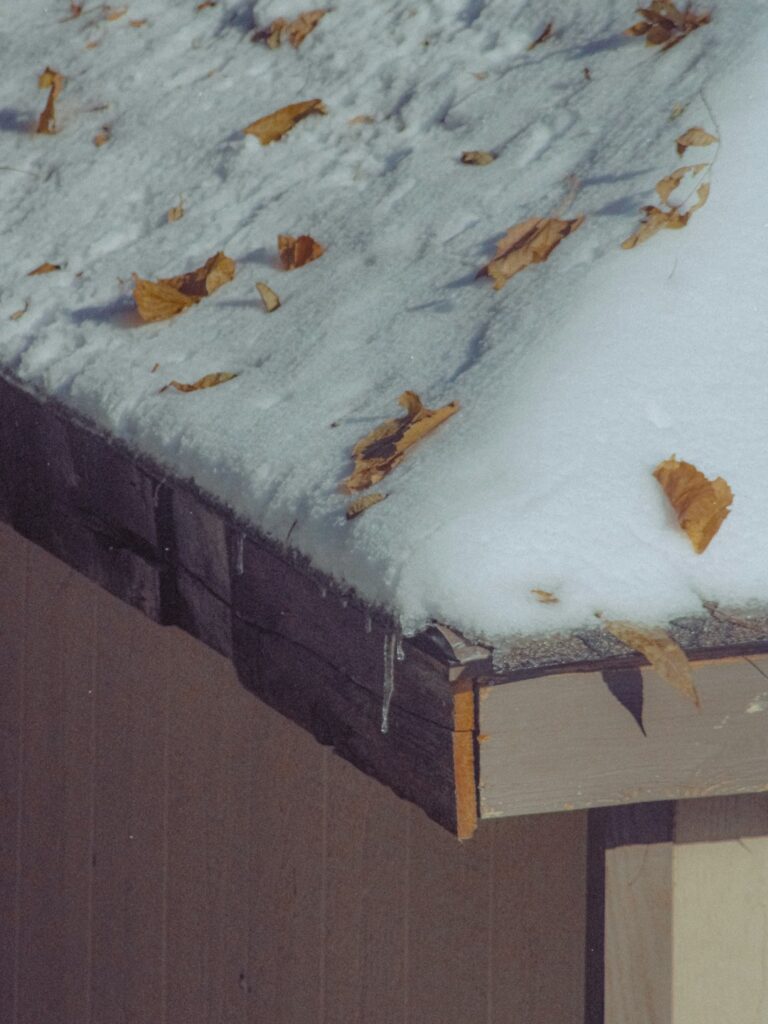
Before winter weather settles over Clinton, NY, a roof should be checked for damage, drainage problems, weak flashing, and ventilation concerns. Snow, ice, wind, and repeated freezing and thawing can turn small defects into leaks, interior water damage, or unsafe conditions.
A careful inspection in early fall gives homeowners time to correct problems before ladders, steep slopes, snow, and ice make roof work more hazardous.
What should be checked before winter?
The most useful preparation starts with a visual inspection from the ground, followed by a closer look only where conditions are safe. A roof does not need to look old to have winter vulnerabilities. Damage can result from summer storms, falling branches, animal activity, or gradual wear around roof penetrations.
Look for:
- Missing, cracked, curled, or lifted shingles
- Dark areas that may indicate exposed underlayment or water absorption
- Loose metal around chimneys, vents, skylights, and roof edges
- Sagging areas along the roof surface or roofline
- Damaged fascia, soffits, or gutter edges
- Heavy moss or organic buildup that may hold moisture
- Shingle granules collecting in gutters or near downspouts
A few loose shingles can allow wind-driven snow or rain to reach the roof deck. Even if no leak is visible indoors, concealed moisture can affect insulation, framing, and ceilings.
How can homeowners inspect a roof safely?
A ground-level inspection is often enough to identify issues that need attention. Use binoculars to view upper slopes, flashing, and roof edges rather than walking on a wet, frosty, or steep roof.
If a roof must be viewed more closely, safety matters more than completeness. Avoid climbing during rain, frost, wind, or snow. Extension ladders should rest on stable ground, extend above the landing area, and be kept clear of electrical lines. Roof surfaces become particularly slippery in cold weather, even when they appear dry.
Never climb onto a roof to remove snow unless the task can be performed safely with appropriate equipment and training. Falling snow and ice can injure people below, damage gutters, and create additional hazards.
Why should gutters and downspouts be cleaned before snow?
Gutters and downspouts need a clear path for water before freezing weather arrives. Leaves, twigs, and roof granules can block drainage, allowing water to collect along the roof edge or overflow against siding and foundations.
After cleaning, check that:
- Gutters are firmly attached and do not sag
- Water flows toward the downspouts
- Downspouts discharge away from the foundation
- Elbows and extensions are not crushed or blocked
- Water is not spilling behind the gutter
In Clinton, freeze-thaw cycles can repeatedly expand trapped water. A partially blocked gutter may function during a mild rain but fail when melting snow has nowhere to go. Ice buildup along the eaves can also place extra weight on gutters and contribute to water backing beneath shingles.
Gutter guards are not maintenance-free. Small debris can still accumulate on top of or beneath them, so the entire drainage system should be checked rather than assuming it is clear.
What roof flashing problems should be corrected?
Flashing is the material used to direct water around joints and penetrations. It is commonly found around chimneys, plumbing vents, skylights, roof valleys, and walls that meet the roof.
Check for flashing that is:
- Bent, separated, rusted, or visibly loose
- Covered with cracked or shrinking sealant
- Missing from a roof-to-wall connection
- Surrounded by staining or dampness in the attic
- Allowing water to collect in a valley
Sealant is not a permanent substitute for properly installed flashing. Repeated temperature changes can cause caulk to shrink, crack, or separate from metal and masonry. Flashing problems are especially concerning before winter because wind-driven precipitation and melting snow can follow small openings into the building.
How does attic ventilation affect winter roof performance?
A properly balanced attic ventilation system helps control temperature and moisture. It generally relies on intake ventilation near the lower roof edges and exhaust ventilation near the upper roof area.
Poor ventilation can allow warm, moist air from the living space to reach a cold roof deck. That moisture may condense, dampen insulation, contribute to mold growth, or create conditions that encourage ice formation near the eaves.
Signs of an attic moisture or ventilation problem include:
- Frost on the underside of roof sheathing
- Damp insulation or darkened wood
- Peeling paint near upper ceilings
- Musty odors in the attic
- Rust around fasteners or metal components
- Ice forming repeatedly along the same roof edge
Air leaks from the home into the attic should also be addressed. Common sources include gaps around light fixtures, attic hatches, plumbing penetrations, and exhaust fans. Bathroom and kitchen exhaust should vent outdoors, not into the attic.
Should roof vents be covered during winter?
Roof vents should not be covered simply because temperatures are cold. Blocking vents can trap heat and moisture in the attic, increasing the risk of condensation and roof deterioration.
Snow can naturally accumulate around vents, but vents should not be intentionally sealed with plastic, insulation, or other materials unless a specific system requires it and the installation instructions support that approach. Attic insulation should also stay clear of soffit vents so outside air can enter.

How should snow and ice be handled?
Snow does not always need to be removed from a roof. Many residential roofs are designed to carry expected winter loads, but the risk depends on the roof’s structure, slope, condition, snow density, and how much accumulation has occurred.
Pay attention to warning signs such as:
- New sagging in the roofline or ceilings
- Doors that suddenly stick
- Cracking sounds from framing
- Large amounts of snow concentrated on one area
- Water stains or active dripping indoors
- Gutters pulling away from the roof edge
Wet snow weighs considerably more than light, dry snow. Removing snow from the ground near entrances, walkways, and lower roof edges can reduce hazards, but roof snow removal should not involve improvised tools or unsafe climbing.
Ice dams are not caused only by heavy snow. They usually involve uneven roof temperatures, heat loss into the attic, snow cover, and limited drainage at the eaves. Removing visible ice without correcting the underlying heat and ventilation problem may provide only temporary relief and can damage shingles or flashing.
What should be checked inside the home?
Winter preparation should include the attic, upper ceilings, and rooms beneath roof penetrations. Look for:
- Brown or yellow ceiling stains
- Peeling or bubbling paint
- Damp insulation
- Drips around chimneys, skylights, or vents
- Musty odors
- Water appearing during wind-driven rain or snowmelt
A leak may not appear directly below the damaged area. Water can travel along roof decking, rafters, insulation, or ceiling framing before becoming visible. Stains that grow after storms or thawing periods deserve attention before temperatures drop further.
Which roof problems require prompt attention?
Some conditions should not be postponed until spring:
- Active leaks
- Exposed roof decking
- Large missing areas of shingles
- Structural sagging
- Loose chimney masonry
- Damaged electrical components near water
- Gutters or roof materials that may fall
- Significant ice buildup blocking drainage
Roof work becomes more difficult and dangerous once snow, ice, and short daylight hours arrive. Completing routine inspections and minor repairs during dry fall conditions is generally safer than waiting for an emergency during a winter storm.
A written checklist, a few attic observations, and a clear view of the roof drainage system can reveal many winter risks before they affect the living space.
